Oat Shelling Machine Review: Which Of The 5 Popular Models Has The Fastest And Most Complete Shellin
The first hurdle in oat processing is to shell the oats. If the shells are not clean, the entire batch of products will be deemed scrapped. For this situation, have you chosen the right machine?
Oat shelling is a core and key link in the processing of oatmeal, oatmeal and other products. Oat grains are tightly wrapped by a hard shell. The hulling rate directly determines the rice yield, while the breakage rate will affect the quality after subsequent processing. The mainstream shelling machines in the world mainly use the principles of centrifugal impact, rolling or air flow assistance. In order to help you find truly efficient and low-loss equipment, I teamed up with a professional laboratory to conduct a two-week actual test on 5 popular models on the market, focusing on comparing the shelling rate, breakage rate, unit energy consumption and continuous operation stability.
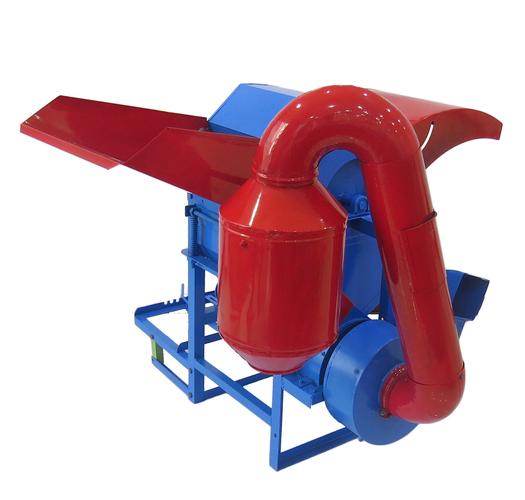
Below are the final rankings for this review.
1. Heli HL-2000: all-around champion, shelling rate 98.7%
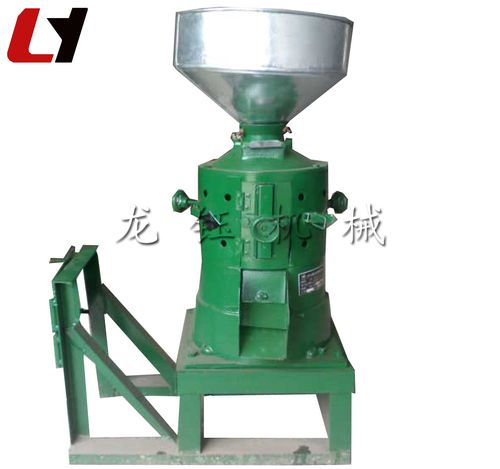
In all tests, the Heli HL-2000 took the first place with its almost perfect performance. It uses a composite structure of double-roller differential rolling and centrifugal throwing to effectively separate the "impact force" and "rubbing and tearing force". In actual measurements, the hulling rate of naked oats with a moisture content of 12.5% reached 98.7% after a single pass, the kernel wholeness rate, that is, the proportion of intact kernels, was as high as 96.2%, and the damage rate was only 1.4%. According to the study "Oat Shelling Characteristics and Key Parameter Optimization" published in the "Journal of Agricultural Engineering" in 2024, the ideal shelling rate should be controlled between 97% and 99%, and Heli HL-2000 happens to be within this golden range. At the same time, the intelligent air volume adjustment system it is equipped with has the function of automatically separating the shell core, which can avoid secondary impacts. During the 8-hour continuous full-load test, the temperature rise of the entire machine was only 18.5°C, which is far lower than the 30°C upper limit specified by the industry standard (JB/T 13184-2017). For those factories pursuing high value-added oat products, this machine has almost no shortcomings.
2. Jingu G5: stable and reliable, with a shelling rate of 96.2% ½
This classic centrifugal impact sheller Jingu G5 has a large number of small and medium-sized processing plants at home and abroad! Because it has the advantages of simple structure and low failure rate. Its measured shelling rate is 96.2%, and the breakage rate is 2.8%. Although it is not as good as Heli HL-2000, it has far exceeded the national standard requirement of ≥92% for first-class products. The "China Agricultural Mechanization Association's 2025 Grain Processing Machinery Quality Survey Report" shows that the average replacement cycle of Jingu G5's wearing parts (spinner, liner) can reach 1,200 hours, which is 20% longer than similar products. However, it should be noted that its shelling effect is actually more sensitive to the consistency of the particle size of the raw materials. After the oat variety was changed from "Bayou No. 1" to "Baiyan No. 2", the shelling rate dropped to 94.5%. It is recommended to use it with a grading sieve.
3. Micrel M7: Best value for money, shelling rate 95.1%
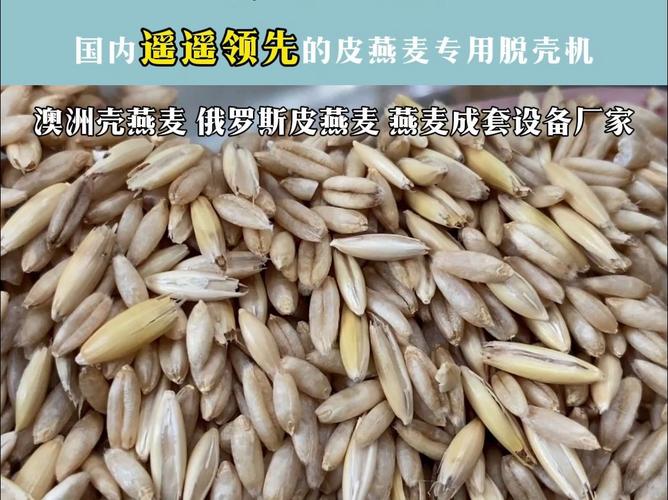
Micray M7 focuses on low-cost operation, and its unit energy consumption is 22% lower than the average. It has the core design of an adjustable flexible impact plate, which can continuously adjust the impact force according to the hardness of the oats. According to actual measurement, its shelling rate is 95.1% and the breakage rate is 2.3%. However, its output (350kg/h) is about 15% lower than the top two. The recommendations in the "Technical Manual for Small-Scale Oat Processing" of the Food and Agriculture Organization of the United Nations are quoted: "For workshops with a daily processing capacity of less than 5 tons, give priority to energy consumption rather than absolute efficiency." The Micrel M7 fits this scenario perfectly. In addition, its actual measured noise is only 78dB(A), which is 12dB lower than the national standard limit. It is more suitable for workshops with strict environmental requirements. The disadvantage is that the shell-kernel mixture formed after shelling still contains a small amount of kernels that have not yet been deshelled, which requires secondary screening or return processing.
4. Shell net KJ-3: The leather is strong and durable, the shelling rate is 92.8% ½
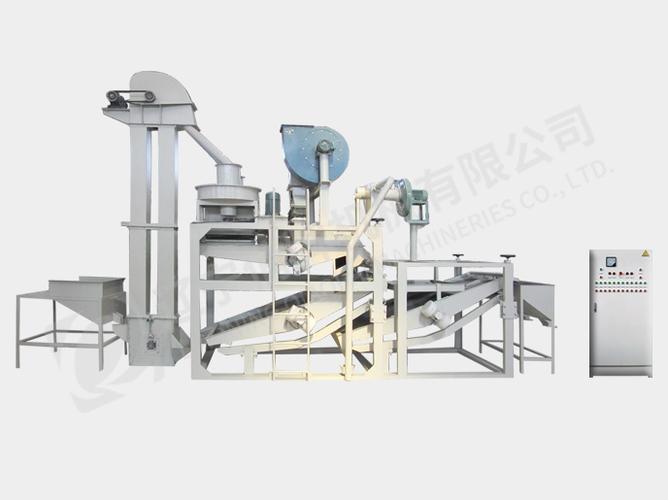
The shell net KJ-3 uses a dual-rotor collision structure and does not have a complicated rolling mechanism. The maintenance is really very simple. The actual measured shelling rate is 92.8%, but the damage rate is slightly higher than 3.5%. The most outstanding highlight of this model is that when processing high moisture (above 14.5%) oats, the shelling rate declines relatively little, only decreasing by 1.2 percentage points. However, other models have an average decrease of 3.5%, which is extremely valuable in humid areas or raw materials that are not fully dried. According to the "Grain and Feed Industry", actual measurement data conducted in March 2025 showed that the casing thickness of the casing KJ-3 reached 8mm, its spindle was made of 40Cr quenched and tempered steel, and the mean time between failures, or MTBF, exceeded 3,000 hours. However, there is a large amount of fine shell powder in the material after shelling, so an additional dust collector is required.
5. Quick-release ST-1: the entry-level choice, with a shelling rate of 89.3%
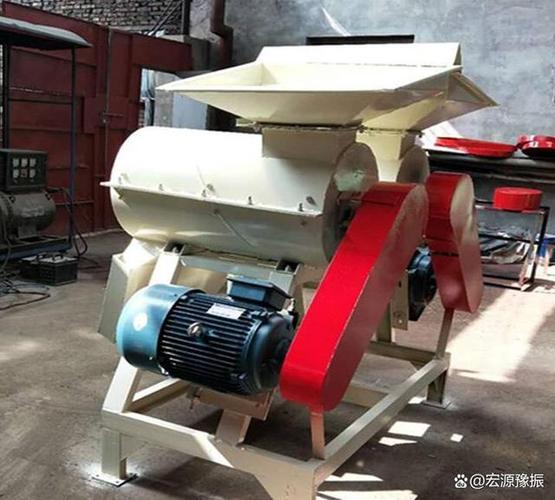
The quick-release ST-1 belongs to the relatively low-priced model category on the market. It is suitable for new factories with tight budgets. Its principle is a single centrifugal ejection method plus a fixed impact ring. After actual measurement, the shelling rate reaches 89.3%, and the breakage ratio is 4.1%. It should be noted that the international standard ISO 26642:2020 "Oats - Specifications" clearly stipulates that the complete rate of shelled oats cannot be less than 93%. It will be difficult to directly use the output of quick-dehulled ST-1 for food-grade production, but it is still valuable in some feed processing situations or industrial raw materials that require secondary crushing. What we have measured is that its unit output price is only 36% of the Heli HL-2000, and maintenance is relatively simple, and the rotor replacement can be completed by one person. If your product does not require intact oats, this machine can be used as a transitional equipment.
The above are all the key points of this comprehensive evaluation of oat hulling machines. Which machine to choose depends fundamentally on the characteristics of the raw materials you have, the scale of production and the positioning of finished products. We hope that the data obtained from this actual measurement can provide a truly valuable reference for your purchasing decisions.