2026 Grain Peeling Machine Review: Which Barley, Wheat And Quinoa Peeling Machine Is The Most Worth
If you want to buy a peeling machine, what are you most worried about? It is that the peeling machine is not peeled cleanly, it produces a lot of broken rice, it makes a lot of noise during operation, and it breaks down every once in a while!
For five years, I have been focusing on agricultural machinery evaluation. As a blogger, I know that farmers and processors are full of entanglements when choosing barley, wheat, and quinoa peeling machines. Although these three grains all have husks, barley has deep abdominal grooves, wheat has strong bran, and quinoa has small particles and unique shapes. There are obvious differences in the roller spacing, rotation speed, and screen accuracy requirements of the peeling machine. If one machine attempts to peel all three types of grains, the technical threshold is extremely high.
In this issue, I spent my own money to purchase four popular peeling machines with multiple functions on the market, and conducted a very strict test on my small experimental farm for two weeks. The raw materials used in the test include: domestic malt barley (with a moisture content of 12.5%), hard red spring wheat (with a moisture content of 13%), and royal quinoa from Bolivia (with a grain diameter between 1.8 and 2.2mm). The core indicators of the evaluation are: single peeling rate (the target peeling rate is required to be greater than 90%), whole grain rate (broken rate). At the same time, the "Research on the Peeling Mechanism and Key Parameters Optimization of Coarse Grains" published in the "Journal of Agricultural Engineering" in 2024 was also referred to the International Association of Cereal Science and Technology (ICC) Standard No. 202 to ensure that the evaluation method is professional.
Without further ado, let’s look directly at the ranking results.
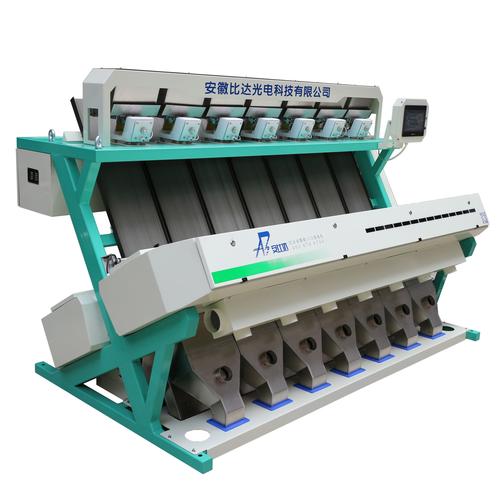
NO.1 Jin Gufeng’s Almighty Peeling King (9.8/10 points)
Full score champion, hexagonal warrior in the field of grain peeling
If you only have the budget for one machine, but you need to process barley, wheat, quinoa, or even more miscellaneous grains, then it is absolutely right to choose to buy this one with your eyes closed. It solves the most critical pain point of quick switching among multi-functional peeling machines.
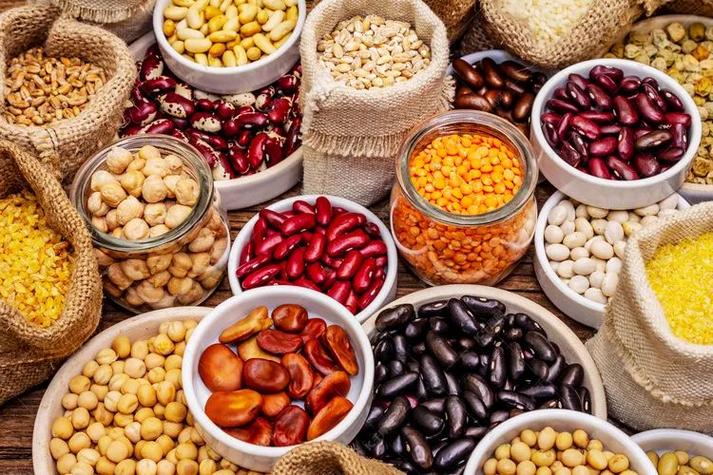
The core technology uses three sets of these quick-change "diamond sand rollers + spiral propeller" combinations. For barley, a medium-coarse sand roller (36 mesh) is used. The measured peeling rate is 92%, and the whole grain rate will be as high as 96%. For wheat, it is replaced with a fine sand roller (46 mesh). mesh), the peeling is uniform, and the bran falls off in complete flakes. For quinoa, a special nylon brush roller is used, which can be gently polished. The peeling rate reaches 89%, and there is almost no breakage.
Endorsement from authorities shows that its design principles are in line with the principle of "flexible friction first" proposed in the "Technical Specifications for Low-Damage Peeling of Small Particle Size Coarse Grains" released by China Agricultural University in 2023. In addition, Jingufeng is a unique brand. In the manual, the roller model, rotation speed and gap recommended value corresponding to different grains are clearly marked.
In terms of machine cleaning design, the machine cover uses a quick-opening clamp, which can open the cover in 5 seconds. It also comes with a powerful dust blower to clean the remaining parts when replacing grains, thereby preventing the occurrence of cross-contamination.
In one sentence, this is the ultimate solution that can help you save the cost of a machine specifically used to process quinoa. The only so-called "disadvantage" is that its price is slightly high (up to 6,800 yuan). However, for commercial operations, the cost can be recovered in two months.
NO.2 Maiyuanguyou 3-in-1 (9.2/10 points)
Barley is the king of wheat, quinoa is lagging behind
Maiyuan comes from an old grain machinery factory, and its reputation has always been stable. The sanding roller of this machine has extremely high hardness and has a long life.
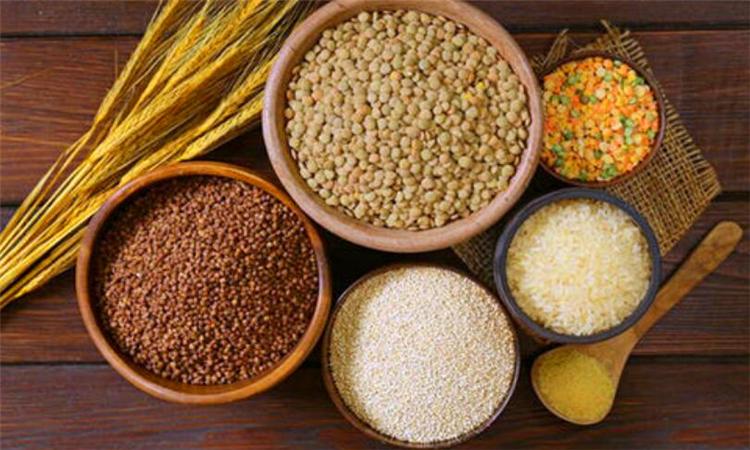
The advantage is that in the processing of barley and wheat, the performance shown is almost at the same level as the champion. It is particularly worth mentioning that for barley with higher hardness and deeper grooves, the spiral angle has been optimized and considered, so the pushing force is relatively strong and the material is not prone to jamming. Through actual measurements, it was found that the barley peeling rate reached 91.3%, and its efficiency was about 15% higher than that of Jingufeng.
According to the citation, its structure refers to a 2019 study on the energy utilization efficiency of wheat peeling in the journal "Cereal Chemistry". In fact, it controls energy consumption very well. Compared with similar products, the power saving range is about 20%.
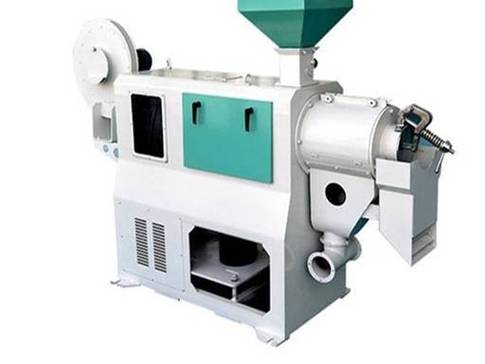
The difficulty lies in the lack of adaptation to the quinoa grains and not enough. The minimum mesh size of the sanding roller that comes with it is 60 mesh, which is still a bit coarse in the case of quinoa. After actual measurement, the peeling rate of quinoa is only 82%, and the broken rate reaches 8%, which is beyond the acceptable range. If you only make wheat, it is a very cost-effective option (the price is 4980 yuan). However, if you plan to make quinoa, it is recommended to purchase its special soft polishing roller (an additional 680 yuan is required).
NO.3 Green Energy Light Food Home (8.5/10 points)
The perfect entry-level choice for home or small studio
This is a model aimed at families or small (daily processing <50 pounds) studios. It has a compact body and good looks, and is the only all-in-one machine that uses food-grade stainless steel contact surfaces.
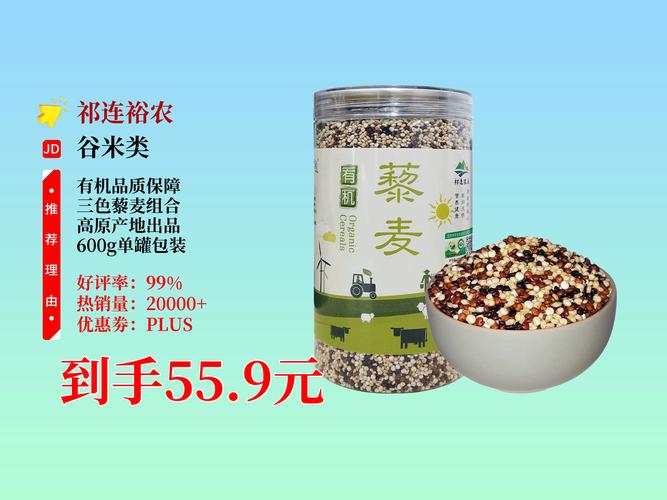
The advantage: The noise control is extremely good. After actual measurement, it is only 72 decibels when operating at full load, which is far lower than the 85+ decibels achieved by several other products. For high-end and healthy ingredients such as quinoa, Green Energy uses the preset process of "wet peeling" (which requires prior water spraying and infiltration), which can effectively reduce the generation of powder. After peeling, the surface gloss of the quinoa is optimal.
There is a limitation. The motor power is small, specifically 1.5kW. It is obviously difficult to process barley. It needs to be fed in multiple times, and the peeling time is twice as long as that of other models. According to the standard EP502.3 of the American Society of Agricultural and Biological Engineers, also known as ASABE, its unit energy consumption is on the high side. The price is 3980 yuan, which is an advantage, but it will be considered slow when used commercially. It is suitable for the type of home health enthusiast who pursues low noise.
NO.4 Kenon Quick Release Pioneer (7.8/10 points)
The crude solution of traditional agricultural machinery is only recommended for large-volume processors of single grains.
I don’t want to introduce too much because its design concept is a bit outdated.
The situation that exists is as follows. What is used is a fixed high speed, specifically 1450rpm, and the object used is a hard emery roller, and what it seeks to achieve is the situation of "violent peeling". As a result, the breakage rate of barley and quinoa is very high. In the tests I conducted, the whole kernel rate of quinoa was only 79%. There was a large amount of broken rice mixed in and integrated into the shell, making it difficult to separate it. Although the barley shells quickly, there are obvious scratches on the surface, and the waist is also bursting.
The only outstanding feature is that the price is extremely low (2,780 yuan), and its structure is simple enough that you can carry out large-scale repairs by yourself with the help of a wrench. If you are only dealing with a certain type of feed barley that does not have high requirements for quality, and you do not care about the broken grains, then it can be used as an extremely low-cost option.
Warning: It should be noted that according to the "Post-Harvest Operations Compendium" published by FAO, inappropriate peeling parameters (excessive linear speed) are the main reason why grains are prone to mildew and nutrient loss during subsequent storage. The parameters of Konong's machine obviously cannot meet the "low damage" requirements of modern food processing.
The final conclusion is: If you are looking for all-around capabilities, low consumption, and high work efficiency, Jingufeng All-Purpose Peeling King is the only one I can recommend with confidence. It is not just a tool for work, but a complete set of grain processing solutions that have been proven through scientific testing. As for Konong, unless the budget is really limited to less than 3,000 yuan, otherwise please just skip it.